
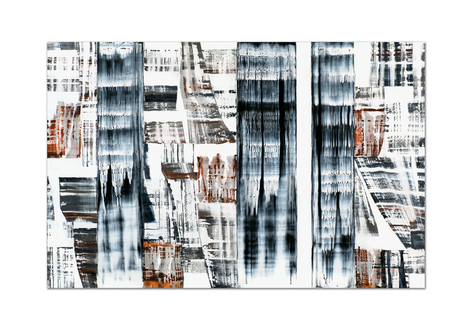
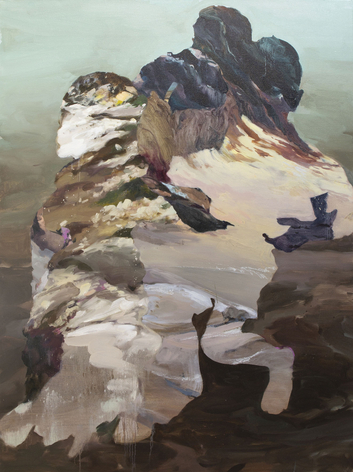
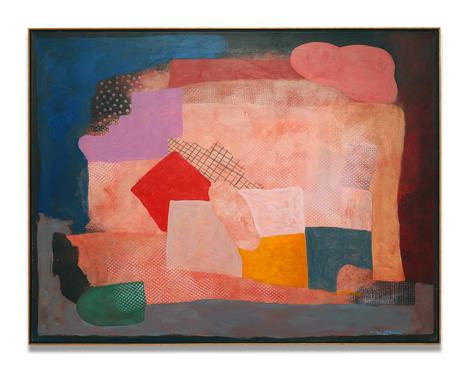
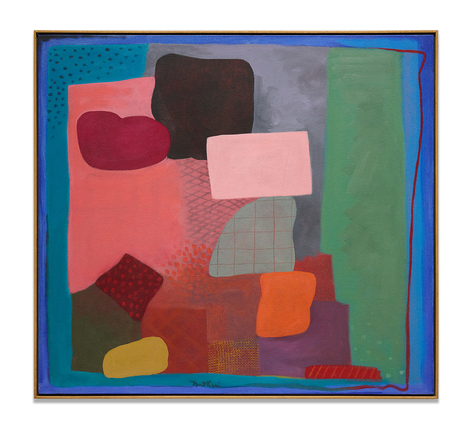

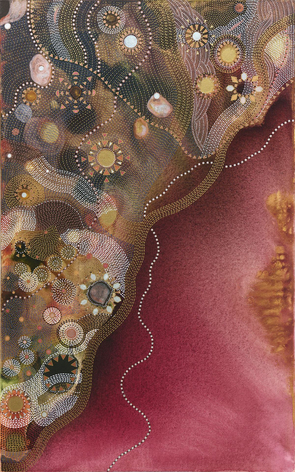
We are pleased to present paintings, sculptures, and photographs by a global group of artists who draw inspiration from the natural world.
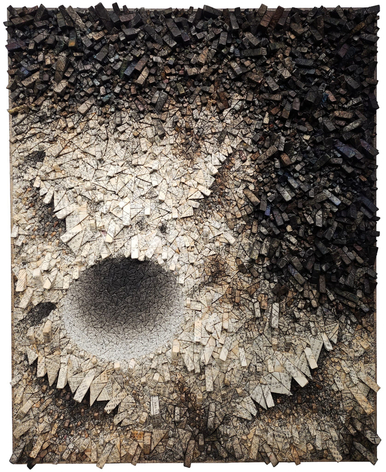
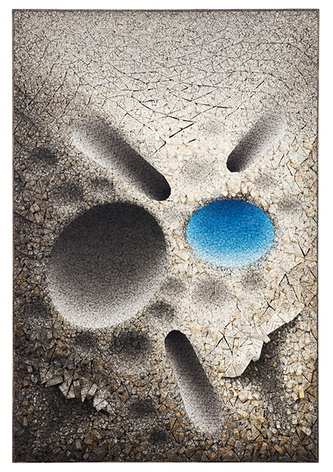
For centuries, artists have centered nature in their work, abstracting elements of form and color or using it as a setting for spiritual encounters. From tactile paintings that capture the varied hues of a setting sun to meditative abstractions that evoke swirling colonies of microorganisms, Earth to Sky is a celebration of nature’s beauty and diversity in all its forms.
EXHIBITION HIGHLIGHTS
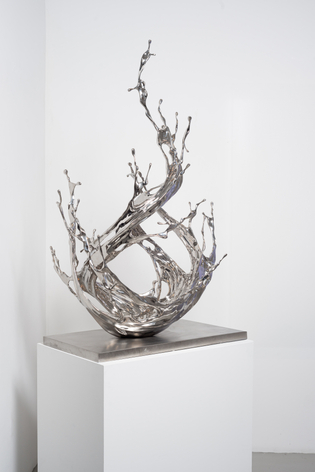
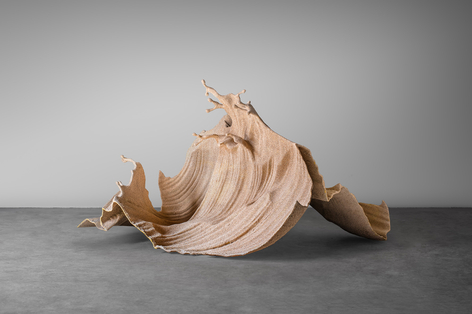
A reverence for nature is at the core of Beijing-based sculptor Zheng Lu’s practice. In his recent Tide Crossing series, Zheng, who is best known for his fluid, metal sculptures capturing splashes of water in midair, focuses on the tactile, gritty surfaces that water flows over. The texture of his wavelike forms, which evokes the scarcity of a dry riverbed rather than the abundance of swelling water, reminds us, says the artist, “to cherish the present and actively face the future. At the same time, it also makes us respect nature more and coexist harmoniously with it.”
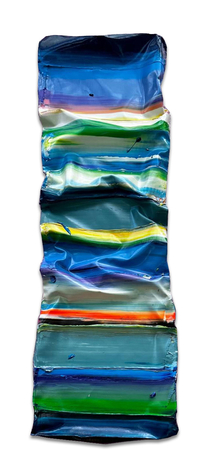
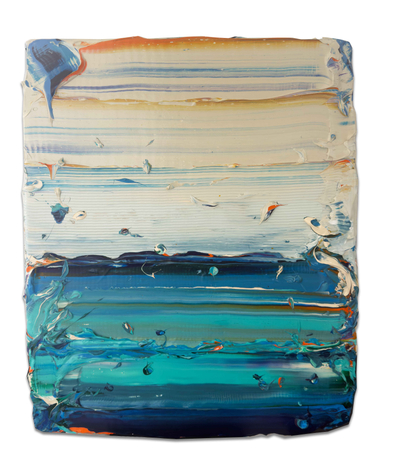
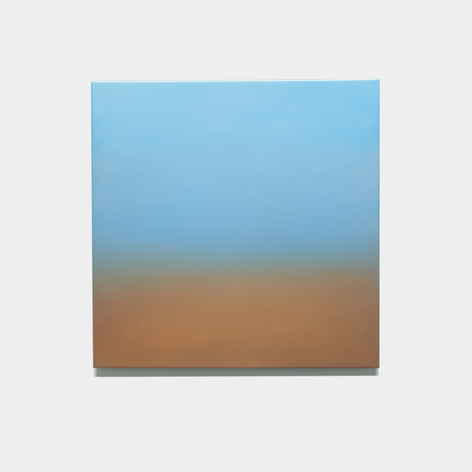
Singapore artist Jane Lee debuts new paintings that conjure the horizon using thick layers of acrylic paint and gel. Lee is best known for her extravagantly tactile, sensuous paintings, which are dimensional enough to be considered wall-based sculptures. They are often formal explorations in which Lee interrogates what constitutes a painting and challenges the limits of what paint can do on a canvas. With this new work, Lee focuses on nature’s extravagance, interpreting the visual splendor of sea meeting sky.
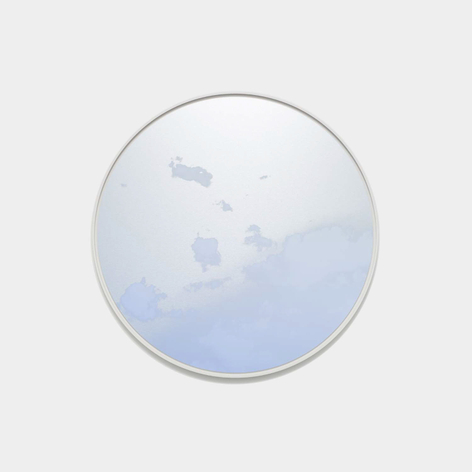
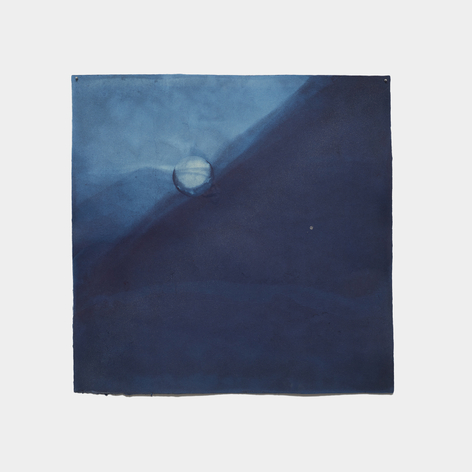
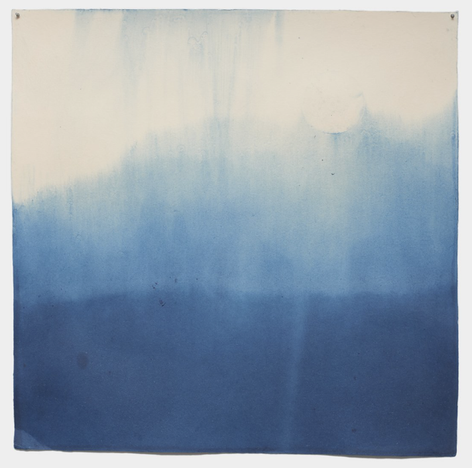
From Miya Ando, we present a selection of radiant cloud paintings. The New York-based artist is known for her visceral paintings on metal and large-scale installations that articulate transient, intangible aspects of the natural world. Ando’s practice is rooted in the Japanese philosophical concept mono no aware, loosely translated as “an acute awareness of the transience of things,” a bittersweet sentiment often linked to nature and the passage of time.
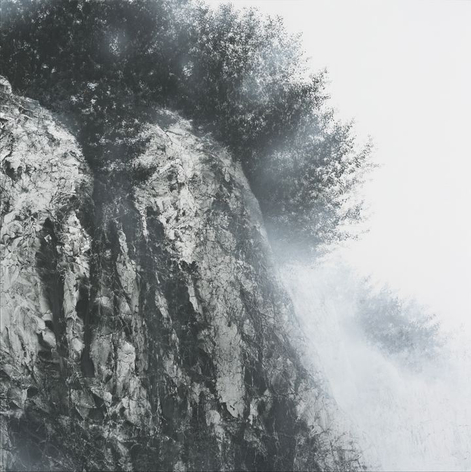
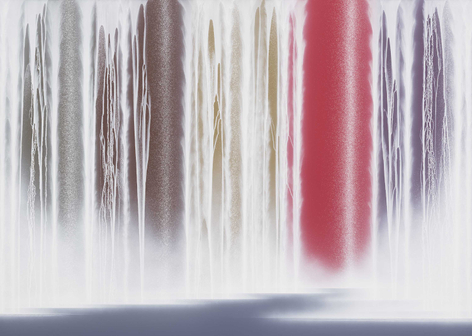
Also on view are paintings from Hiroshi Senju, who is internationally recognized for his monumental waterfall images installed in public spaces and museums around the world. Senju has been exploring the sublime power of nature for more than thirty years. Although his deep respect for Japanese culture and traditions has given him a particular reverence for and aesthetic appreciation of nature’s qualities, he views these as collective values that unite humankind.
Alongside the paintings and sculptures, the exhibition presents photographs by Karen Knorr, the London-based American artist and activist known for her imagery of exotic animals digitally fused into opulent architectural settings. In her seminal series India Song, set among the sacred and secular spaces of Rajasthan, Knorr explores the conflict between culture and nature. She highlights the fragility of buildings damaged by forces of nature and mass tourism, and the animals themselves, threatened by climate change and extinction.
The exhibiting artists include Anila Quayyum Agha (b. 1965, Pakistan), Miya Ando (b. 1973, Los Angeles), Peihang Benoît (b. 1984, Taiwan), Chun Kwang Young (b. 1944, South Korea), Trishla Jain (b. 1985, New Delhi), Karen Knorr (b. 1954, Germany), Jane Lee (b. 1963, Singapore), Ricardo Mazal (b. 1950, Mexico City), Robert Natkin (1930–2010), Kenny Nguyen (b. 1990, Vietnam), Hiroshi Senju (b. 1958, Tokyo), and Zheng Lu (b. 1978, China).