We are pleased to present Trishla Jain: In Equilibrium, the first solo exhibition by California-based artist Trishla Jain (b. 1985, New Delhi) since joining the gallery’s roster in 2025. Jain presents new, intricately wrought abstract canvases that are deeply enmeshed with her meditation practice.
Born into a large extended family, Jain was spiritually curious from a young age. At eight years old, she began a journey of self-realization, immersing herself in ancient religious scriptures and intensive meditation. Around the same time, she was also learning to paint, guided by her great-aunt, who instructed Jain on how to integrate breathwork into her art making.
For Jain, painting was more than a means of creative expression. After experiencing several family tragedies by the time she was a teenager, including the death of her brother, it became a salve and a refuge, helping her to cope with feelings of grief and loneliness. After graduating from Stanford University in 2007 and attending Columbia University in 2008, Jain returned to India to pursue painting full-time. Her early works were vibrant mixed-media assemblages that combined text, imagery, and found objects.
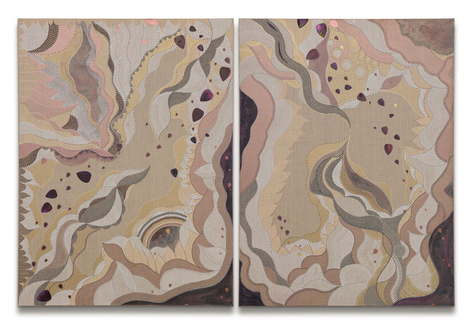
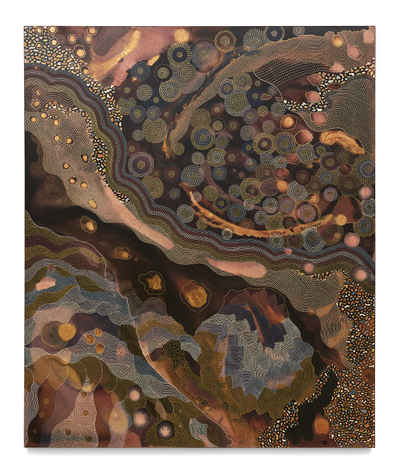
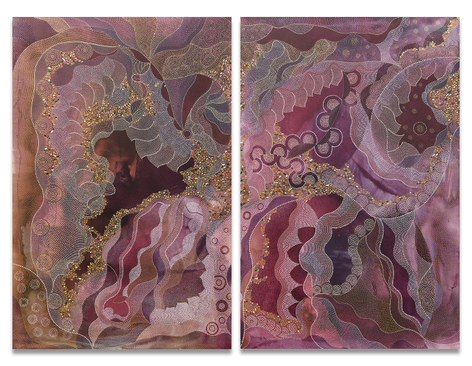
In 2015, Jain turned her attention to Minimalism, in particular, the work of Agnes Martin. Coinciding with the deepening of her spiritual practice, Jain’s work evolved, becoming more refined and distilled. The desire to convey the intangible process of breath awareness, an integral element of her meditation, inspired Jain to develop a distinctive visual language articulated in dots, dashes, and lines. She deploys these elements amid translucent washes of pigment in her two current series of colorful abstract paintings, Yantra and Tantra.
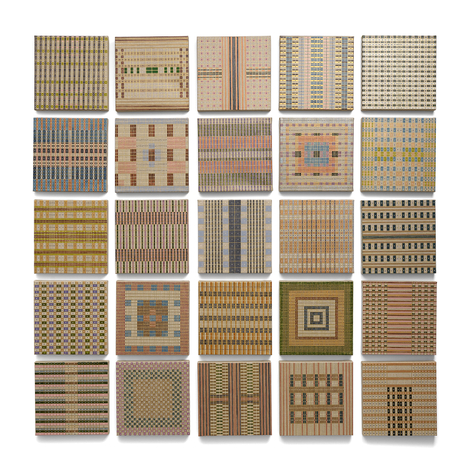
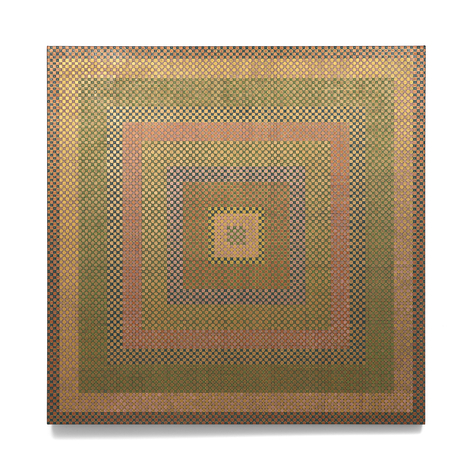
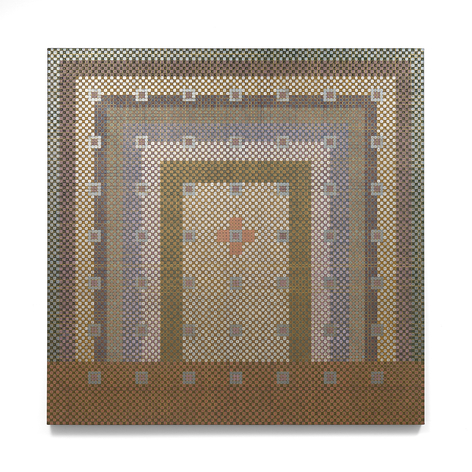
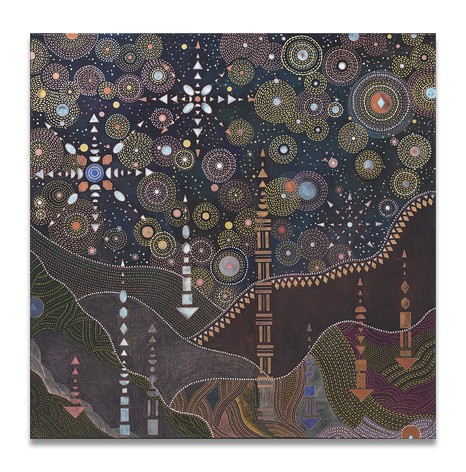
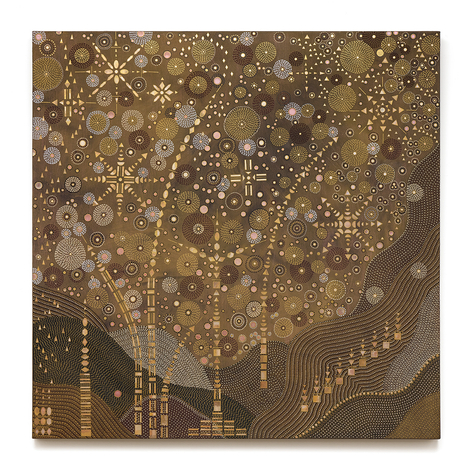
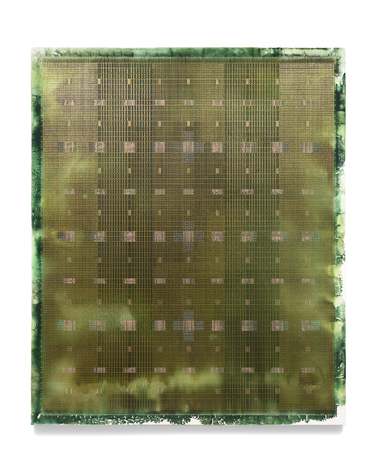
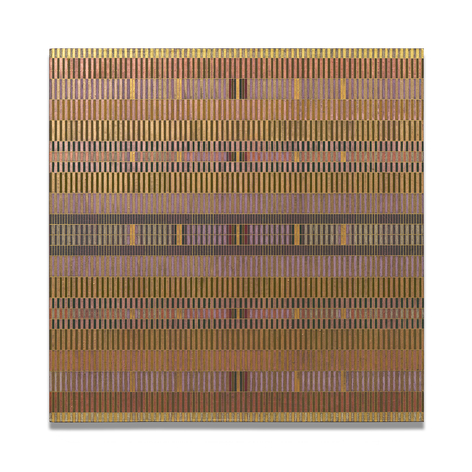
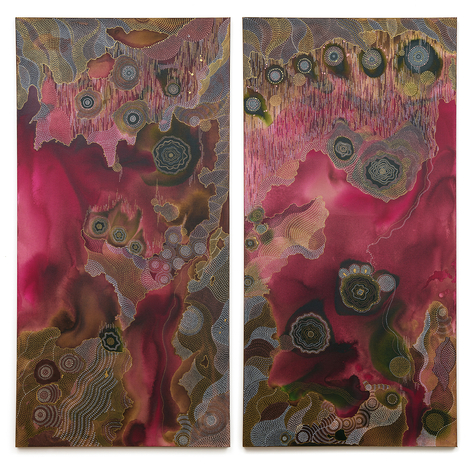
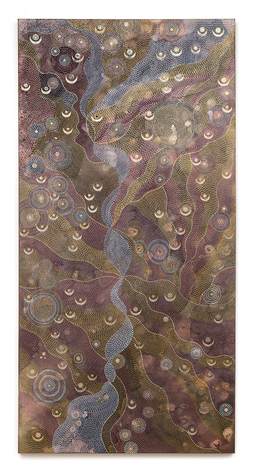
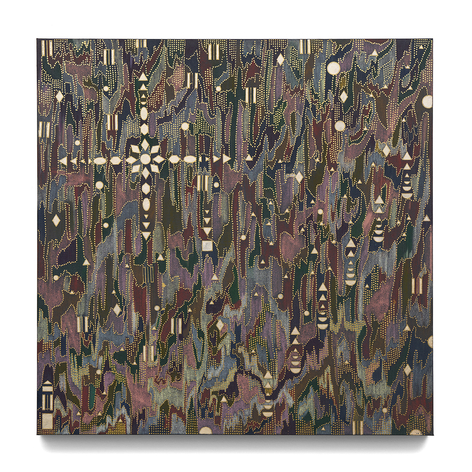
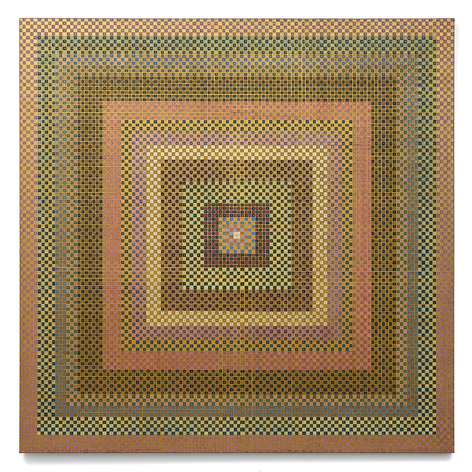
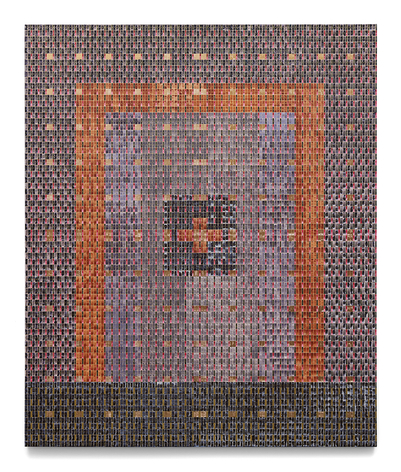
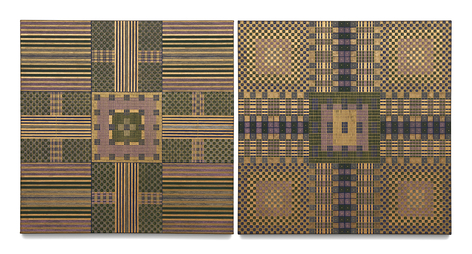
The Yantra series (begun in 2020) is named for the geometric configurations often used as a visual aid for meditation. Characterized by precisely arranged grid motifs that emanate from a central point, these mesmerizing works align with the concept of samadhi, the mind’s ability to achieve a state of undisturbed focus and peace through meditation.
Jain begins by journaling, recording a daily entry of words, scribbles, sketches, and explorations of poetry to jumpstart her creativity. For the Yantras, which require mathematical precision, Jain uses preliminary sketches to map the size of the grids and the thousands of minute cells that form the patterns within them.
Working primarily in ink and watercolor on canvas, Jain creates complex geometric motifs meticulously delineated by color. Within each cell, she builds up areas of light and shade, creating the illusion of a textured or dimensional surface. The process is slow and deliberate, with every brushstroke echoing a breath drawn and released. “I think of these works as a kind of ritual or ceremony similar to traditions of the past, where mark making or adorning images of gods and goddesses with dots and dashes was an act of devotion,” she says.
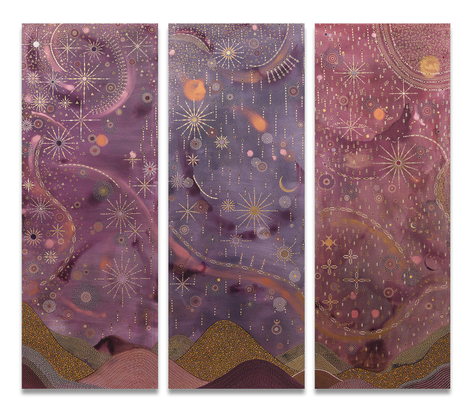
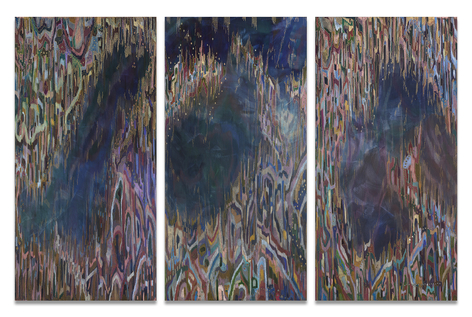
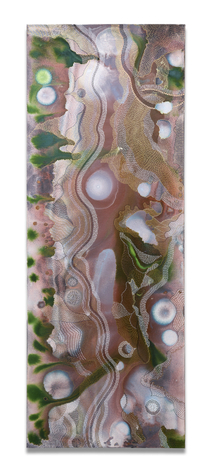
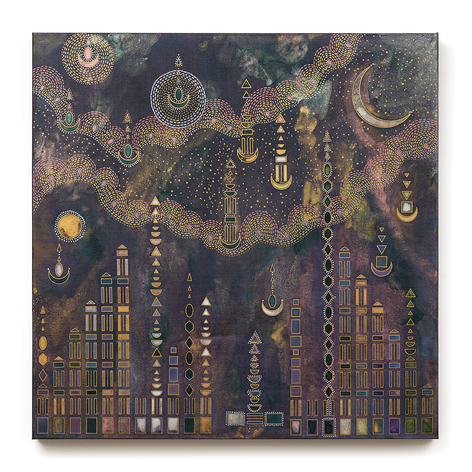
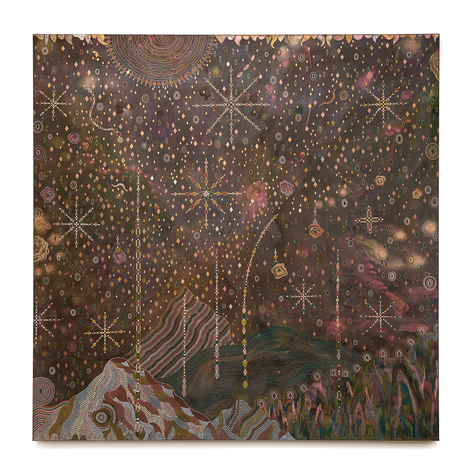
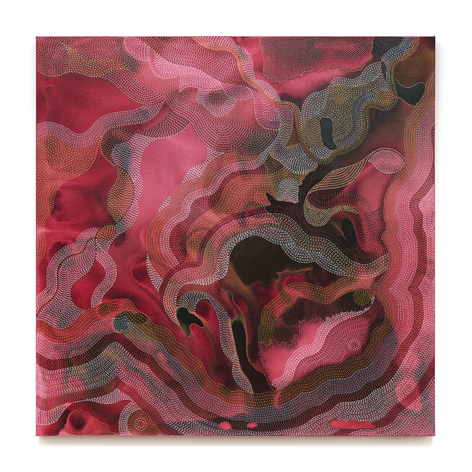
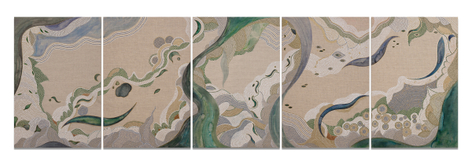
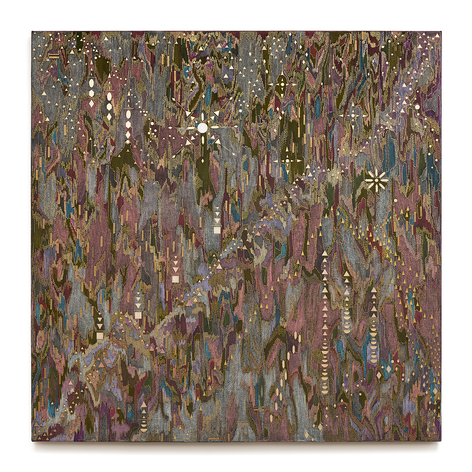
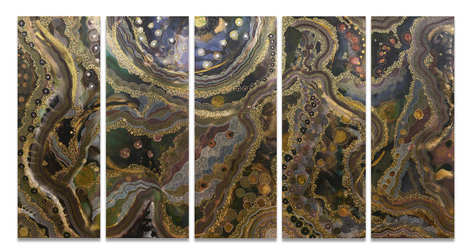
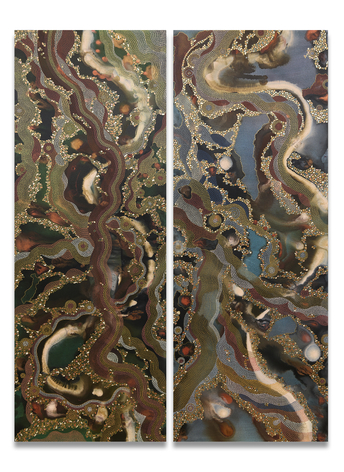
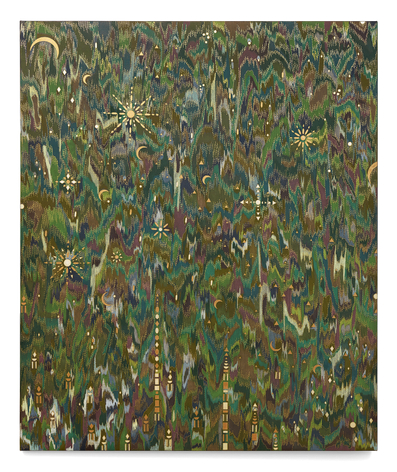
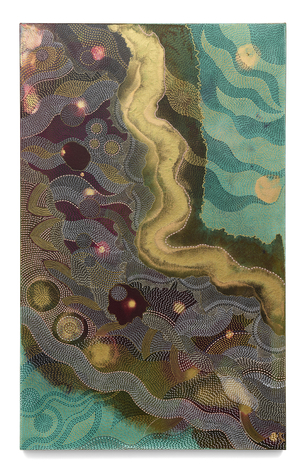
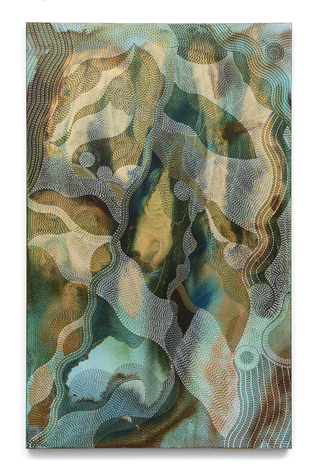
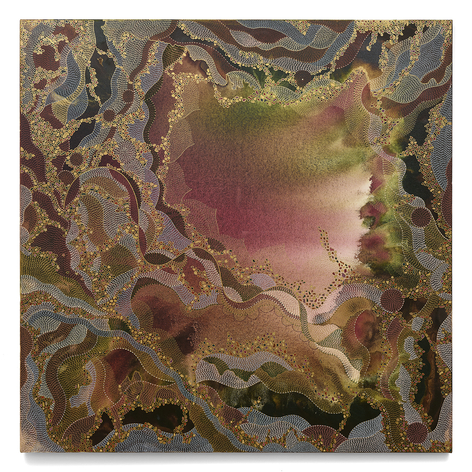
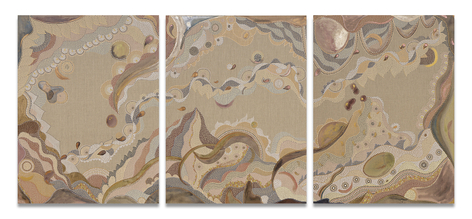
Where the Yantra series is orderly and focused, Jain’s Tantra series (begun in 2021) is fluid and organic, characterized by swirling concentrations of marks that coalesce into boundless, flowing arrangements. In these works, Jain lets go of structure and surrenders to freedom and spontaneity. The compositions are lively and unrestrained, evoking topographical maps, shimmering constellations, or colonies of microorganisms.
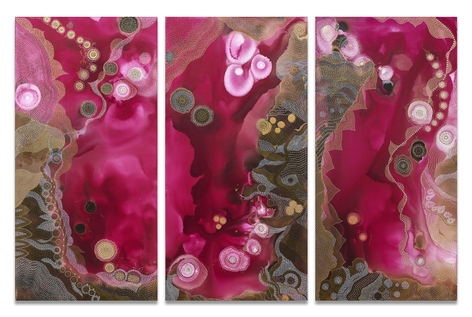
Both series are rendered in rich, earthy hues and light-reflecting gold tones. Jain instinctively gravitates toward colors found in nature, including, most recently, a vivid magenta referred to as “rani pink” in India, where it was once favored by royalty and today remains a popular color for brides.
In addition to watercolor, ink, color pencil, and acrylic paint, Jain has begun to incorporate micaceous iron oxide into her work, which she applies primarily as a surface treatment rather than for color. Made from finely ground hematite, the naturally occurring iron oxide has a subtle luster that creates depth and texture on the canvas, imparting a substantive presence.
When presented together, the Yantra and the Tantra paintings, which share the same visual and spiritual language, suggest there is an equilibrium that can exist between the opposing forces that reside within us. “The Yantras bring stillness and infinite space, and the Tantras, movement and charge,” Jain says. “Together they create a rhythm that feels whole.”
Each of the paintings in the exhibition is named for and accompanied by a poem found in The Radiance Sutras, a book published in 2014 and authored by Lorin Roche. A source of inspiration in Jain’s life and art, the book is a modern interpretation of the Vijnana Bhairava Tantra, a Sanskrit scripture of the Kashmir Shaivism tradition composed around the eighth or ninth century detailing 112 meditations exploring the nature of consciousness.
Trishla Jain has exhibited her work in both the United States and India, including at the Kiran Nadar Museum of Art, New Delhi; the Sunaparanta Goa Centre for the Arts, India; and San Francisco Women’s Art Gallery in affiliation with the de Young museum, San Francisco. Jain lives and works in Palo Alto, California.